


【3D Printing】NIKE to release fully 3D-printed Air Max 1000!
A futuristic 3D-printed shoe
3D printing technology has entered the footwear industry, opening up more disruptive possibilities for design and production models. After years of development, this technology has gradually expanded from initial conceptual and experimental innovations to the mass market. In other words, as costs, production capacity, and market conditions mature, 3D-printed shoes are gradually transitioning from "visible" to "wearable" for interested consumers.
Nearly forty years ago, Tinker Hatfield revolutionized athletic shoes with visible Air technology. Now, Nike is once again redefining footwear design by integrating 3D printing technology into shoe production. The Air Max 1000, co-created by Nike and German 3D printing expert Zellerfeld, is undoubtedly Nike's most ambitious manufacturing leap to date. This is a fully 3D-printed sneaker that inherits the essence of the original Air Max 1 while pushing it into uncharted territory. After causing a stir at ComplexCon 2024, the "black" and "oatmeal" colorways will finally be released in limited quantities on August 19, 2025, on Zellerfeld and SNKRS' official websites respectively (US$179), allowing sneaker enthusiasts to truly experience the transformative power of 3D printing technology in footwear for the first time.
Nearly forty years ago, Tinker Hatfield revolutionized athletic shoes with visible Air technology. Now, Nike is once again redefining footwear design by integrating 3D printing technology into shoe production. The Air Max 1000, co-created by Nike and German 3D printing expert Zellerfeld, is undoubtedly Nike's most ambitious manufacturing leap to date. This is a fully 3D-printed sneaker that inherits the essence of the original Air Max 1 while pushing it into uncharted territory. After causing a stir at ComplexCon 2024, the "black" and "oatmeal" colorways will finally be released in limited quantities on August 19, 2025, on Zellerfeld and SNKRS' official websites respectively (US$179), allowing sneaker enthusiasts to truly experience the transformative power of 3D printing technology in footwear for the first time.
Nike | Zellerfeld
This sneaker features a laceless design that follows the visual language of the Air Max 1, but with a complete structural reimagining. Nike's visible Air unit is still present, appearing in "all-orange" in the oatmeal version and electric green in the black version. All other details are derived from Zellerfeld's proprietary printing process.
Weighing 103 grams less than its counterparts, the Air Max 1000 retains all the iconic elements of Hatfield's 1987 masterpiece, processed through a digital filter. The iconic mudguard pattern is now sculpted directly onto the zellerFOAM TPU structure, creating a depth and texture fundamentally different from traditional manufacturing processes.

Nike | Zellerfeld
Zellerfeld's approach is more than just novelty. Their variable-density printing technology allows for different regions within a single product: providing stronger support where you need it and flexibility in key areas of movement. Their fused filament fabrication completely eliminates the need for glue, stitching, and traditional assembly lines. This is not just different; it's inherently more efficient and potentially more sustainable.

Nike | Zellerfeld
The black colorway best showcases the exquisite nature of 3D printing technology and the specially designed textures. While the soft oatmeal color might obscure some details, the monochromatic black finish highlights every sculptural angle and textured surface. The mesh-like structure covering the upper and the angular geometry of the midsole create an almost futuristic architectural feel, which would require significantly increased complexity and cost to replicate with standard manufacturing processes.

Nike | Zellerfeld
In fact, NIKE is not alone in its commitment to integrating the footwear industry with 3D printing technology.
Zellerfeld has collaborated with various brands and designers since its early days, providing a channel for the general consumer to learn about and purchase 3D-printed footwear. Its core value lies in significantly bridging the gap between 3D-printed shoes and ordinary consumers. Zellerfeld enables a true "on-demand production" model through open-source tools: consumers can create personalized 3D-printed shoes by paying a fixed fee and utilizing digital models along with Zellerfeld's design guidelines. More notably, designers can also follow the platform's step-by-step instructions to sell their designs directly on the Zellerfeld website for all consumers to purchase, earning income in the process. Zellerfeld uses a foam-like TPU polymer to address the common comfort issues with 3D-printed shoes, making them softer and more elastic to the touch than most 3D-printed footwear. More importantly, it is more environmentally friendly as it uses no glue adhesives or industrial rubber in its production.
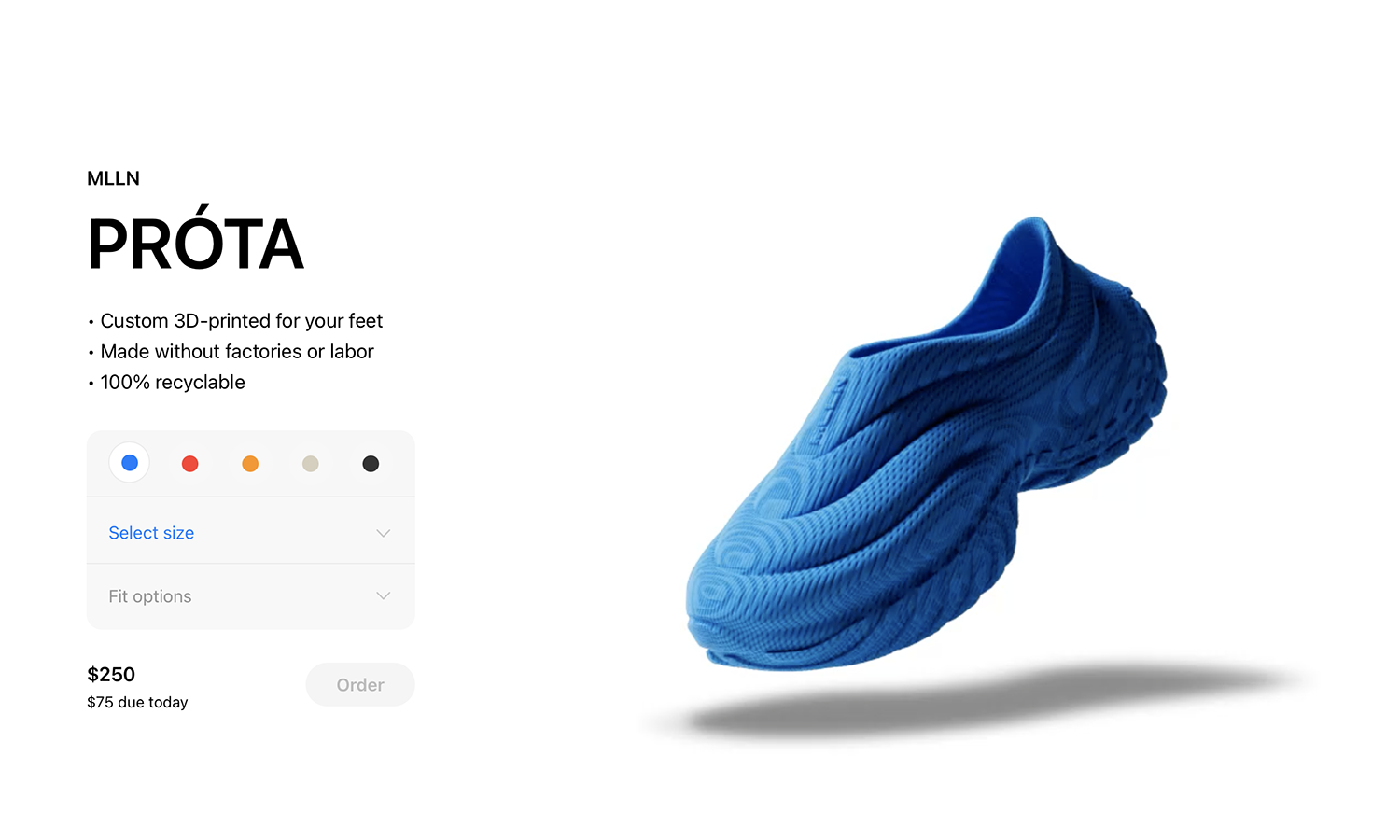
Official Purchase Page | Via Zellerfeld
As 3D printing technology continues to overcome cost and efficiency bottlenecks (e.g., Form3L significantly improving the precision of large-sized parts, Raise3D enabling digital mass production of shoe uppers), this experiment, which began with limited collaborations, will eventually transition to a regular presence in the mass market. In the future, every pair of shoes in your closet might start with a unique digital file—customization as the norm, sustainability as the standard. This is the ultimate prophecy that the Air Max 1000 writes for the global footwear industry.
Reference Article
Reference Article
Want to learn more about 3D printer product information? Click below to contact us!
- Contact Us -
3DMart offers more than just 3D printing; we provide three major OEM services: "3D printing services," "3D scanning services," and "3D spatial scanning services"!
Follow our fan pages for the latest updates:
Facebook | Instagram