


Purdue University Develops 3D-Printed Groundwater Sensor: Providing Low-Cost Scientific Instrument Solutions for USGS
3DMart Hong Kong is an expert in digital manufacturing solutions. Please contact us to schedule a consultation for the latest 3D printing technology!
Researchers at Purdue University have developed an open-source, 3D-printed groundwater flow sensor as a potential alternative to the U.S. Geological Survey's (USGS) existing expensive, proprietary sensors. The patent-pending device costs only a few hundred dollars to assemble, a fraction of the cost of commercially available hardware.
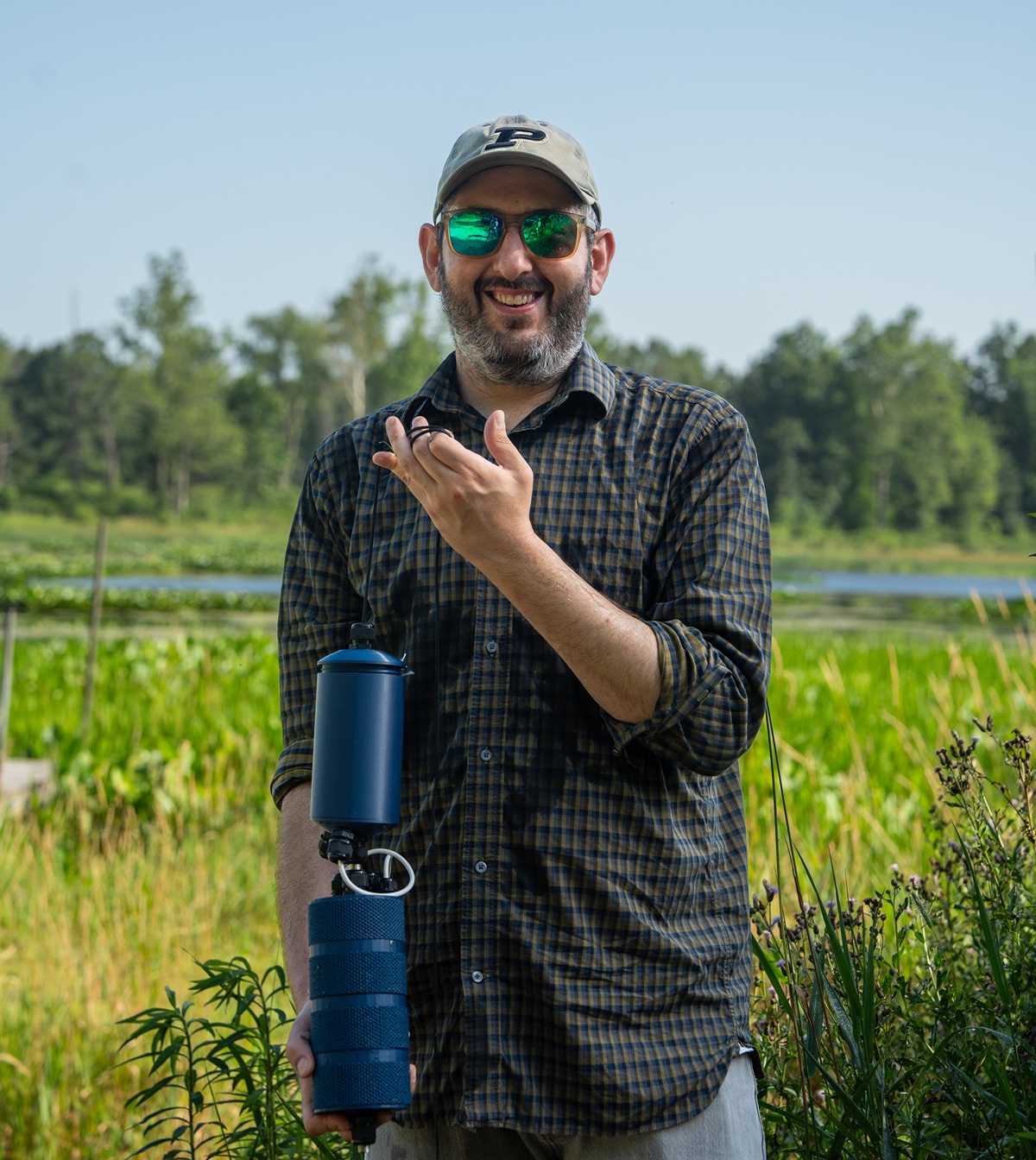
The project is led by Jacob Hosen, Assistant Professor of IoT and Ecological Analytics in Purdue University's Department of Forestry and Natural Resources, in collaboration with the open-source hardware non-profit organization River Restoration Intelligence and Verification (RRIV). Funding comes from the USGS's "Next Generation Water Observation System" (NGWOS), a department dedicated to developing cheaper and faster water data collection technologies.
A Sensor that can be 3D Printed and "Baked"
Instead of relying on a single expensive probe, the device infers groundwater flow through heat. A circuit board equipped with an array of temperature sensors determines the speed and direction of water movement in the soil. The electronic components are housed in a 3D-printed enclosure, which the team designed, printed, and iterated directly in the lab, forming a loop that allows them to modify the hardware within hours without waiting for external manufacturers.
The enclosure design proved to be challenging, as any enclosure that interferes with water flow would affect the measurement results. "The key to designing an accurate sensor is to create an enclosure that doesn't interfere with water flow," Hosen said. "We're using 3D printing to create textures that mimic the soil environment, so water flows through the sensor exactly as it would through the soil."
Production scale is deliberately kept small. The team orders a small number of parts from US suppliers, and all other processes are completed in-house using 3D printers and a special oven for reflow soldering of electronic components. "We just source all the components from a few US suppliers and then assemble them ourselves, costing only a few hundred dollars per device," Hosen said. "This is not something that can be done in most ecological labs."
Manufacturing these devices in-house also serves as a teaching tool. Graduate and undergraduate students involved in the project can learn skills such as circuit board assembly, 3D printing, and prototype iteration, which are usually limited to engineering labs, not the Department of Forestry and Natural Resources.
Durability Test: Eight Months of Underwater Operation
Early durability tests have been the most compelling proof so far: the sensors operated continuously underwater for seven to eight months without failure. If this performance can be maintained on a large scale, these devices are expected to become standard long-term installations in USGS wells, designed for continuous operation for months or even years, rather than just short-term field operations.
Data transmission uses a dual approach. The sensors transmit data wirelessly via aLoRanetwork built on campus by Purdue University's Agricultural Information Technology team, while also writing data to local storage as a backup, ensuring that data is retained even in remote areas with unstable network connections. Purdue University is leveraging its expanding LoRa network coverage to test the telemetry system on campus before official deployment.
The first large-scale field test is planned for a USGS site on the Kankakee River near the Illinois border, with other units placed in Purdue University's ACRE wetlands for hydrological research. Hosen co-developed the concept with Zaven Arra, chief engineer at RRIV; Keith Cherkauer, professor of agricultural and biological engineering and director of theIndiana Water Resources Research Center, serves as co-principal investigator.

New, affordable sensor, patent pending. Image from Purdue University.
Its potential uses extend far beyond academic hydrology. Hosen notes that it could be used by the USDepartment of Defenseto track contaminated groundwater plumes, monitor the amount of water data centers extract from underground, and assess the stability of buildings in saturated soil. "Anywhere water is flowing underground, it can work," he said.
Open Source Hardware Challenges in a Closed Market
Purdue University's handling of this patent is key. It submitted the application through the Purdue Office of Technology Commercialization, not for the purpose of selling licenses, but to open source the design, which aligns with RRIV's philosophy: an open source water quality monitoring platform dense enough to track water quality changes over time. The current gap is structural; when reference instruments are expensive, and even the USGS can only afford a small number, effective monitoring becomes difficult.
This strategy is not without precedent. In January 2025,researchers at the University of Strathclyde released a £50 open source 3D-printed microscope, aiming to make laboratory-grade microscopes accessible to schools, clinics, and labs. A few months later,a team at the University of Edinburgh open-sourced the Flex Printer, a machine costing less than £400 that can produce fully functional soft robots, with the goal of expanding access to this field long limited by cost and expertise.
Open source hardware has popularized lab technology over the past decade. Purdue University is betting that the same logic will hold true after eight months submerged at the bottom of a well.
💡 3D Printing Promotes Scientific Democratization:
- Low Cost: Professional-grade instruments can be manufactured for just a few hundred dollars.
- Rapid Iteration: Design modifications can be completed within hours using 3D printing technology.
- Open Source Sharing: Breaking the monopoly of expensive commercial equipment, allowing more organizations to participate in environmental monitoring.